
Samsaragammon
A board game born from a Curvist painting.
Two players, the six realms of the Buddhist wheel of life, and one question: can your consciousness reach the Human realm intact?
Free, no sign-up. Buddha teaches you as you play.
How it works
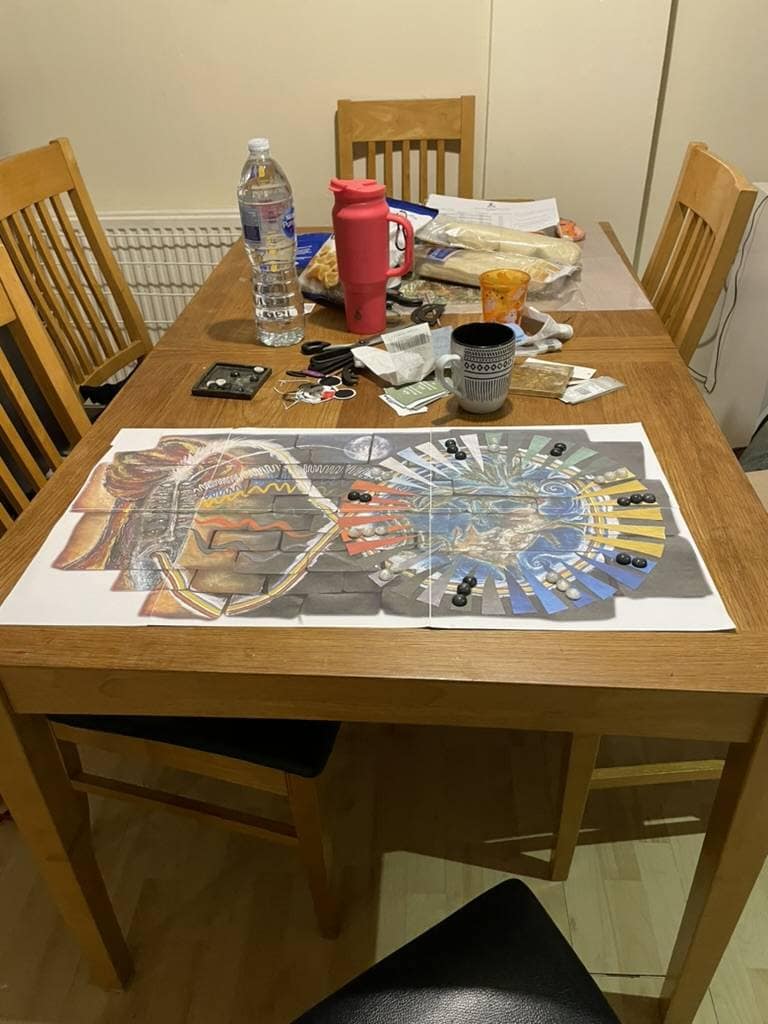
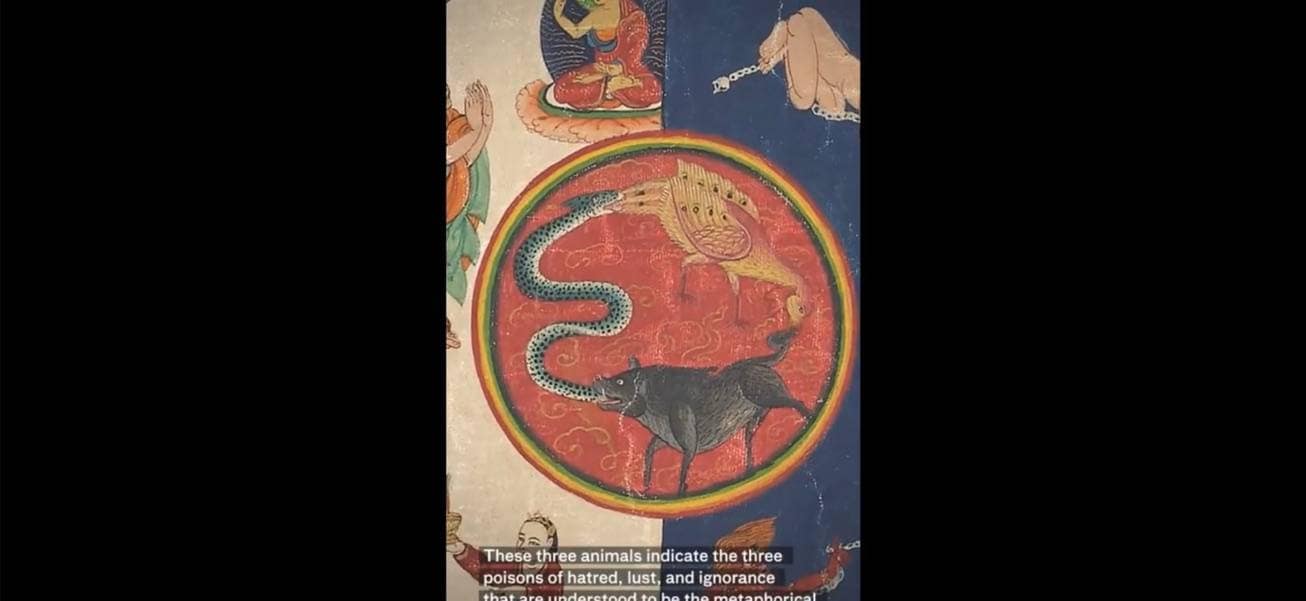
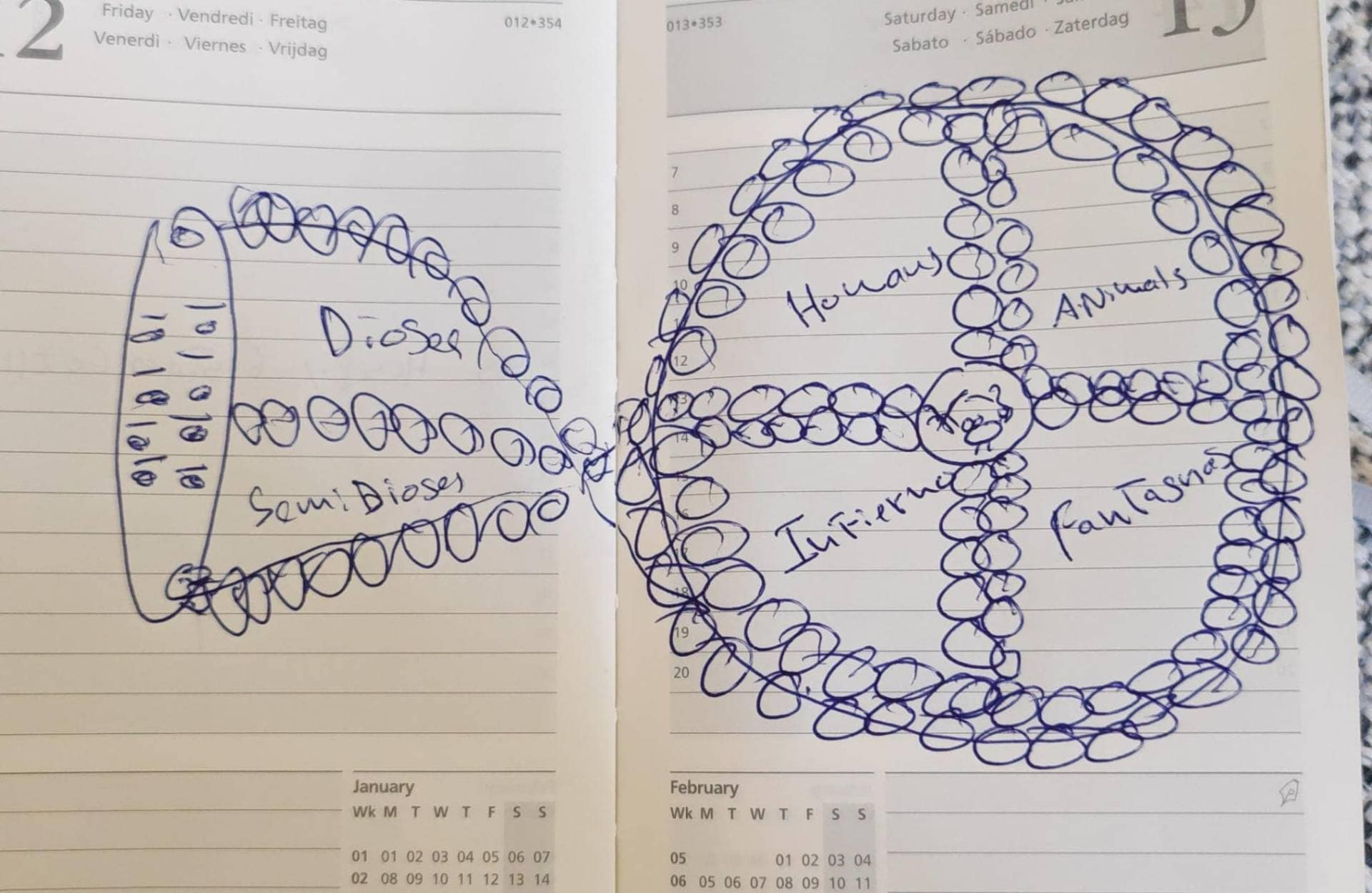
- The board is the wheel of Samsara: 24 spaces across six realms.
- Each player guides six Avatars — Bruno, Margot, Oriol, Marino, Rufus and Whitman — one human consciousness evolving through history. They are born one after another as the game advances.
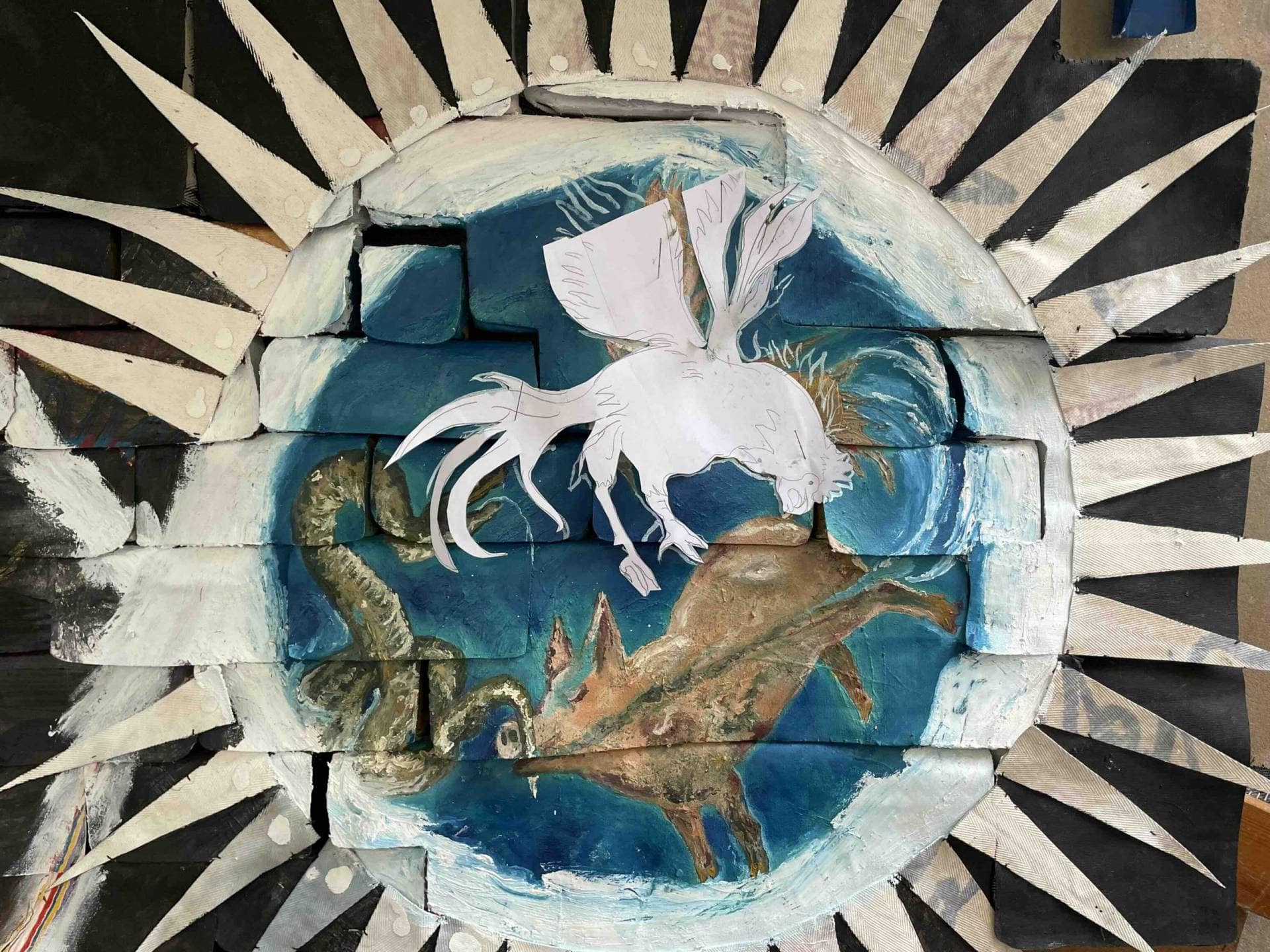
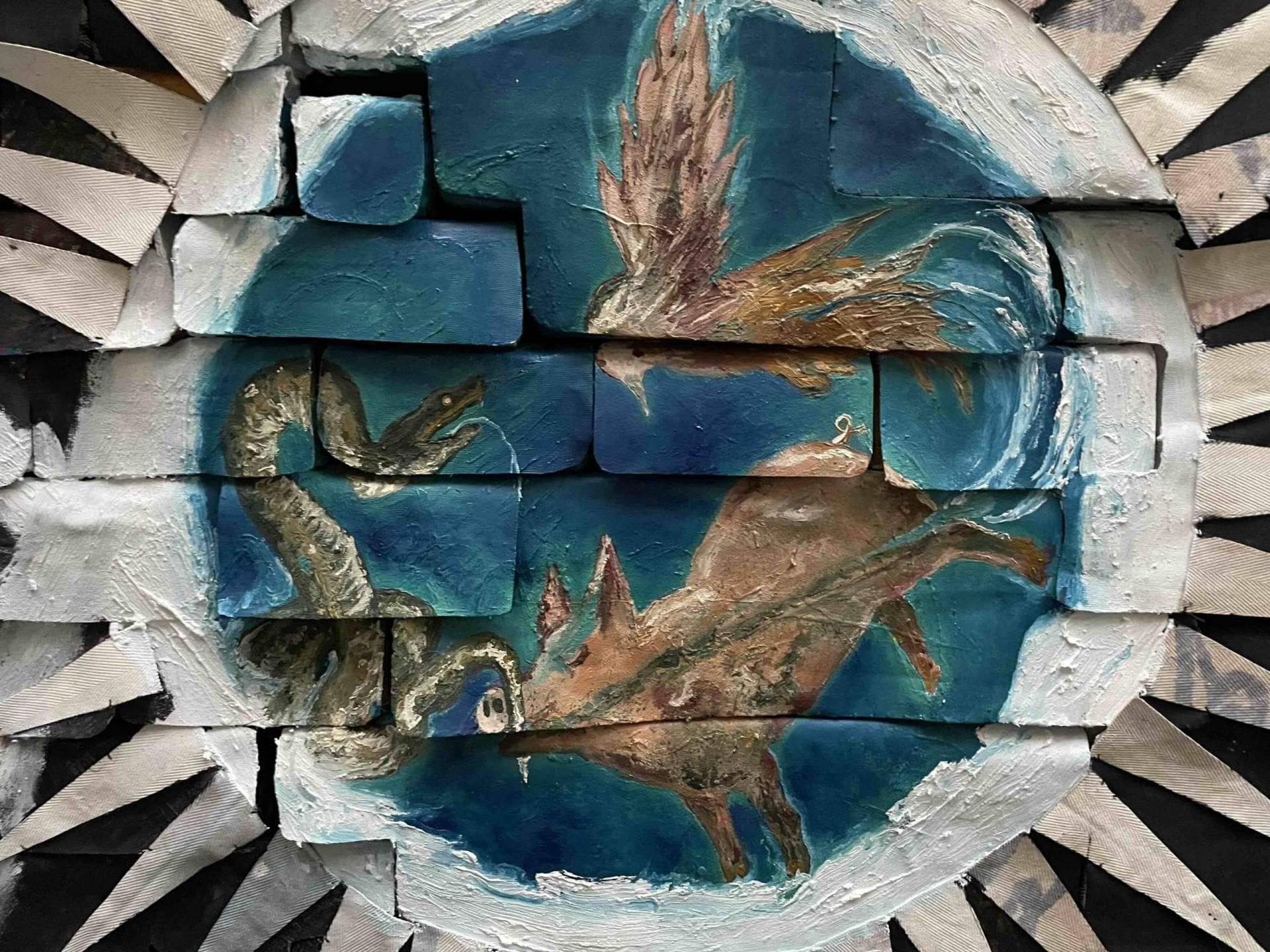
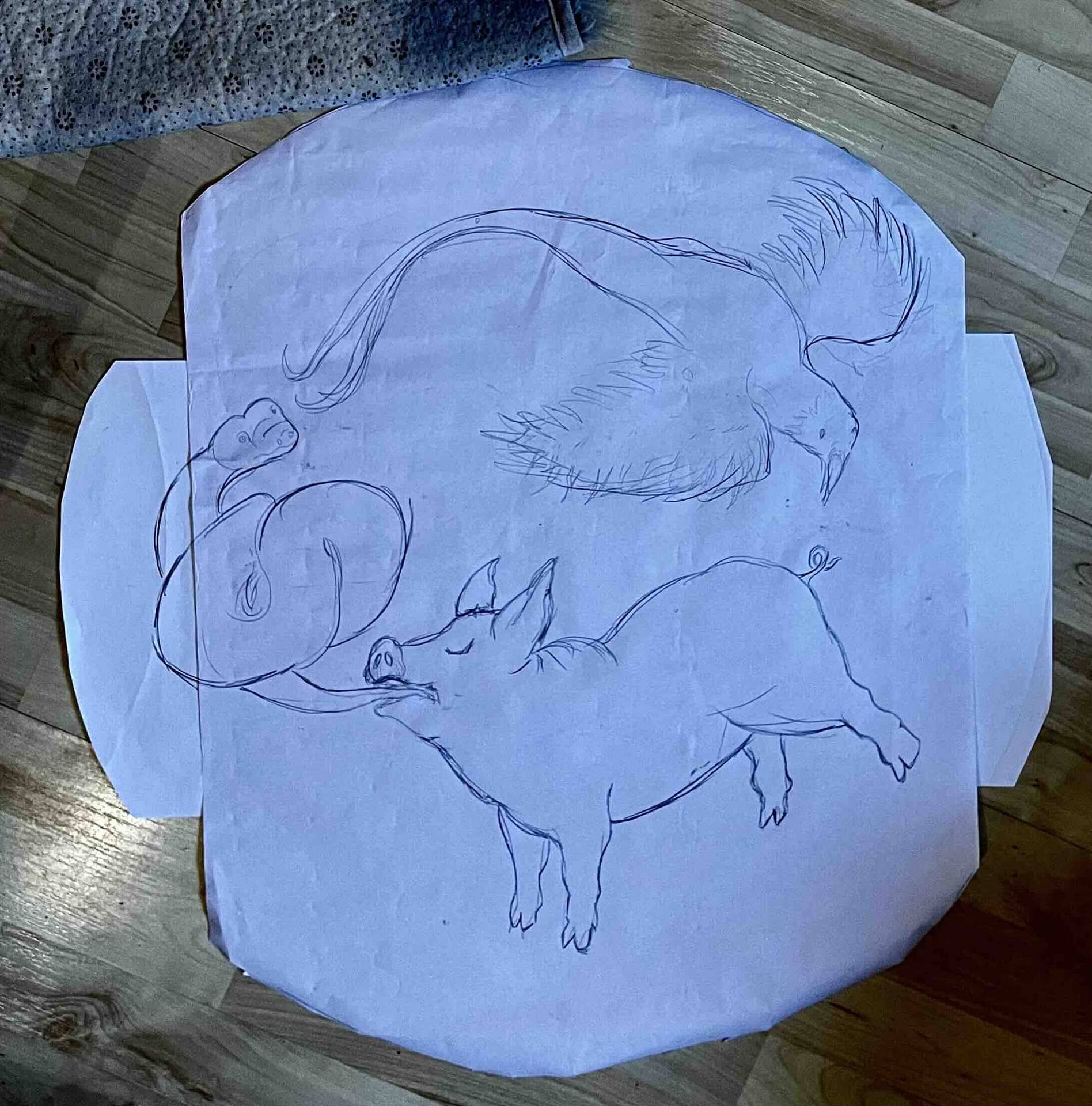
- Three Poisons move with them: the Pig, the Snake and the Rooster.
- Captured pieces fall into Mara and wait before returning.
- An Avatar that reaches the Human realm without ever being captured blooms as a lotus. The others must negotiate a Fandango.
- Win: all six of your Avatars bloomed in the Human realm.
🧪 An evolving research project
Samsaragammon is a game and an artistic investigation born from painting and developed over years of experimentation.
Its origin connects three lines that at first seemed independent: the stages of human evolution, the six realms of Samsara described by Buddhism and the seven spiritual heavens referenced by Ramtha.
Overlaying these systems revealed an unexpected correspondence that made it possible to explore a central question of Curvism: how humanity gradually moved from an environment dominated by the organic, curved forms of nature to a world built mainly of straight lines, angles and cubic structures.
But Samsaragammon was not born first as a theory or as a board game.
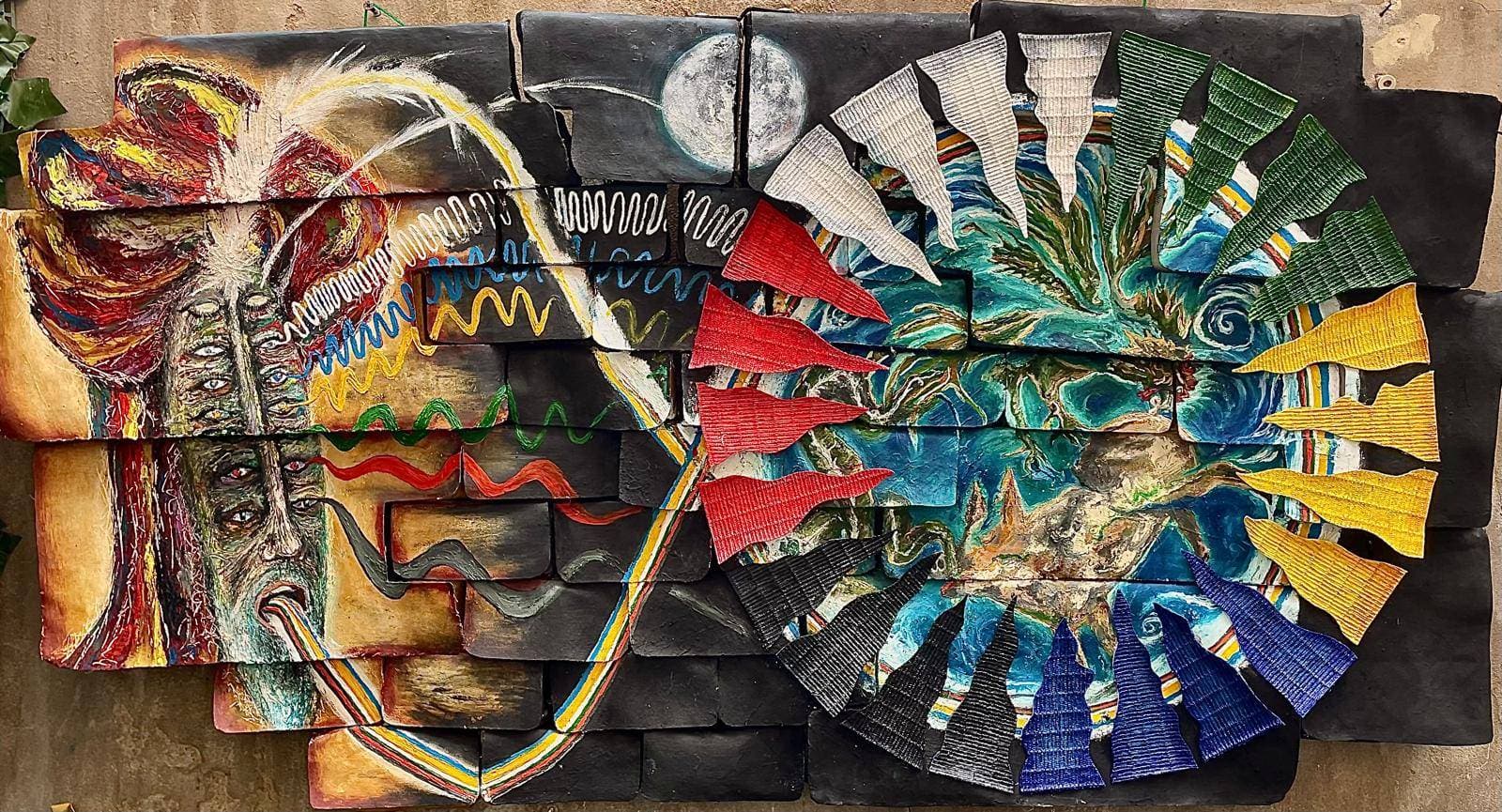
It was born from a painting.
The story that follows documents how a pictorial investigation into the Homo-Hologram ended up, almost by accident, becoming the universe of Samsaragammon.
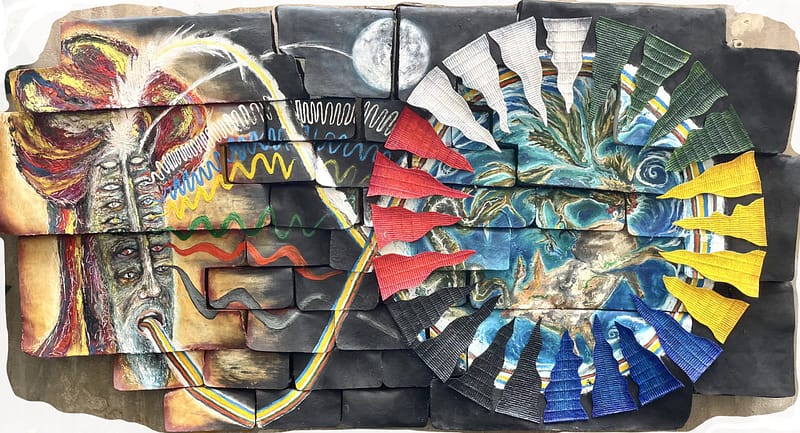
FROM THE HOMO-HOLOGRAM TO SAMSARAGAMMON
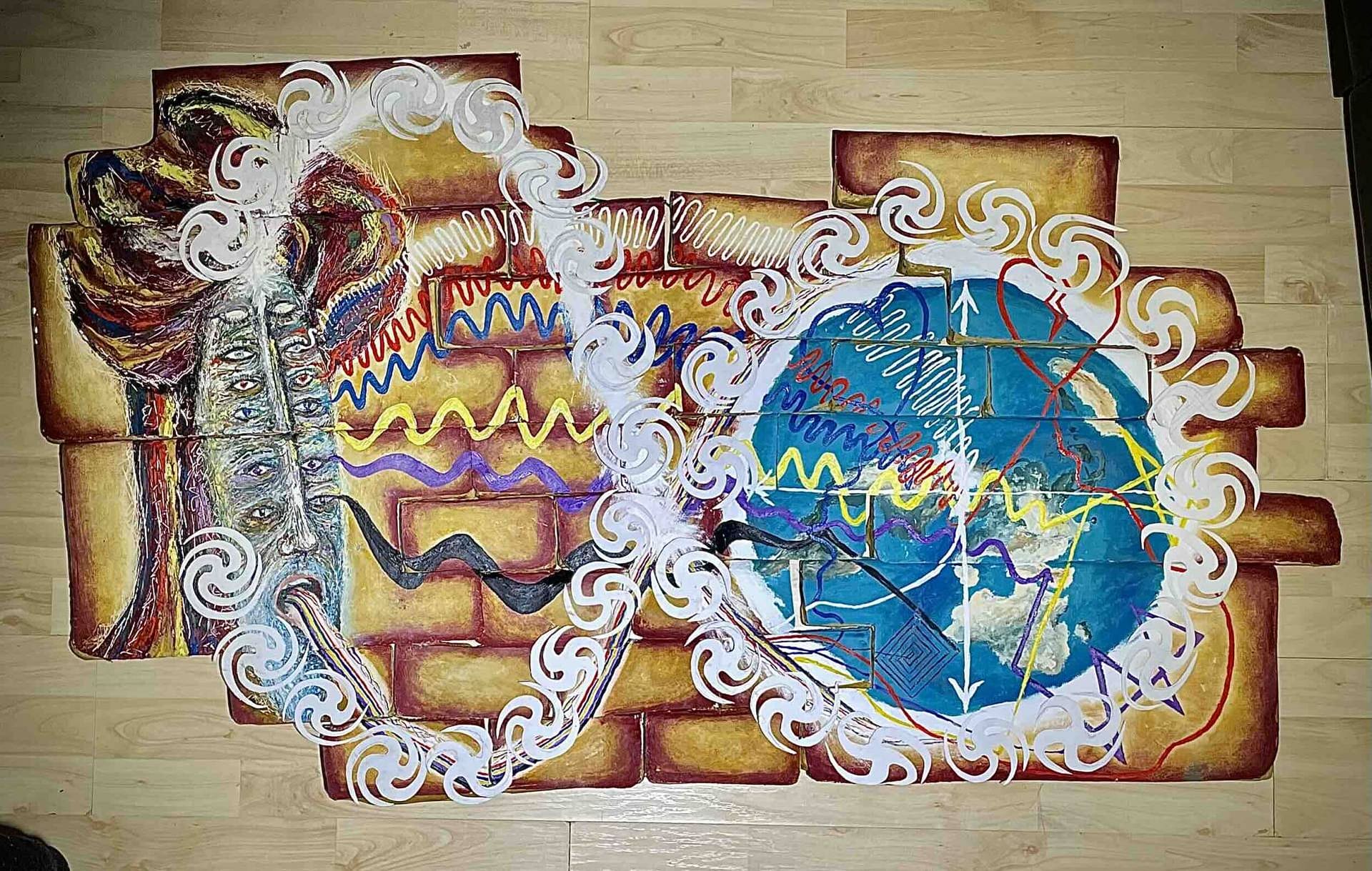
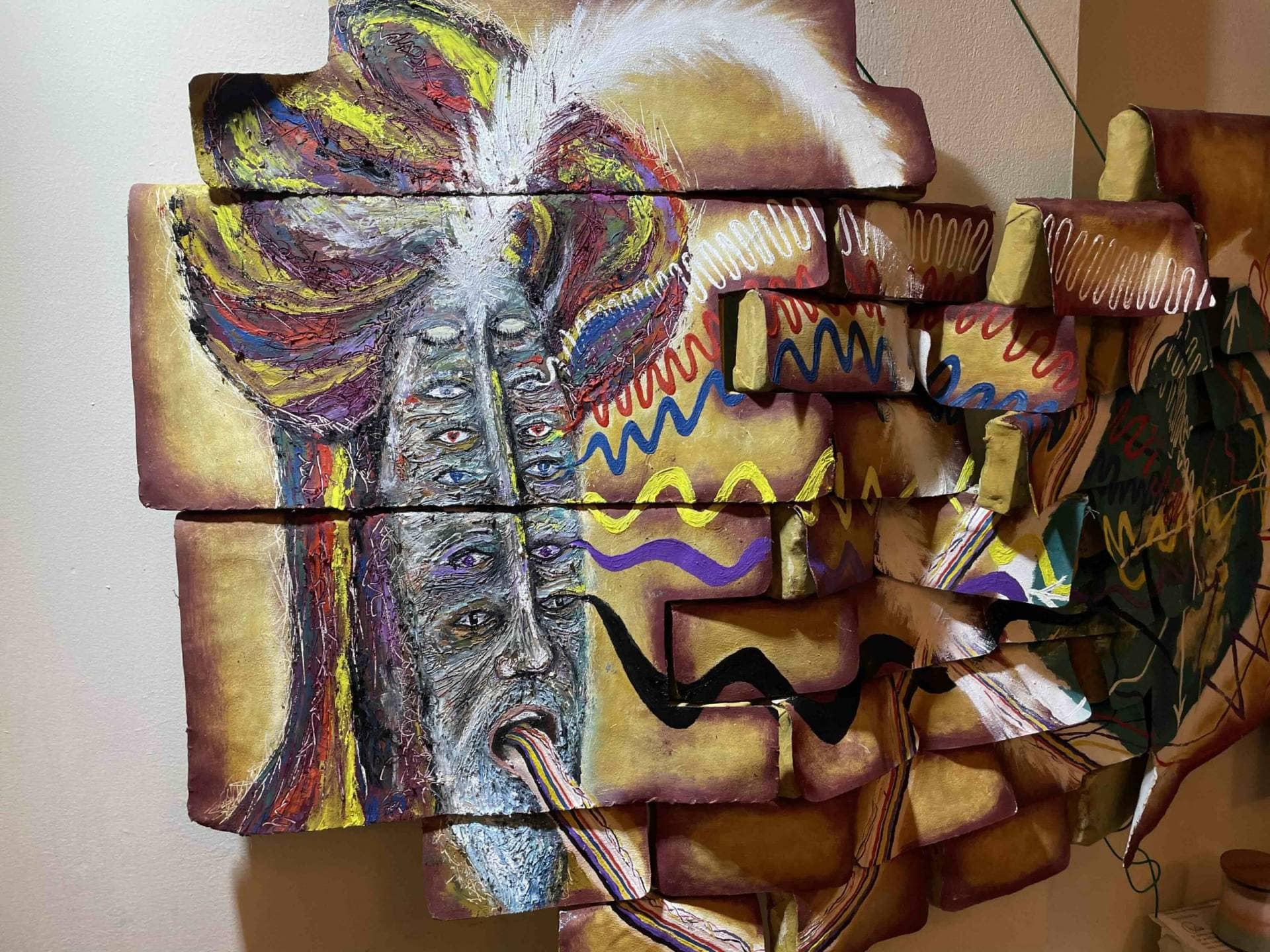
“When I began this work, I wanted to explore the extraordinary discovery of holography and its philosophical implications: the possibility of thinking of each fragment as part of an interconnected whole.
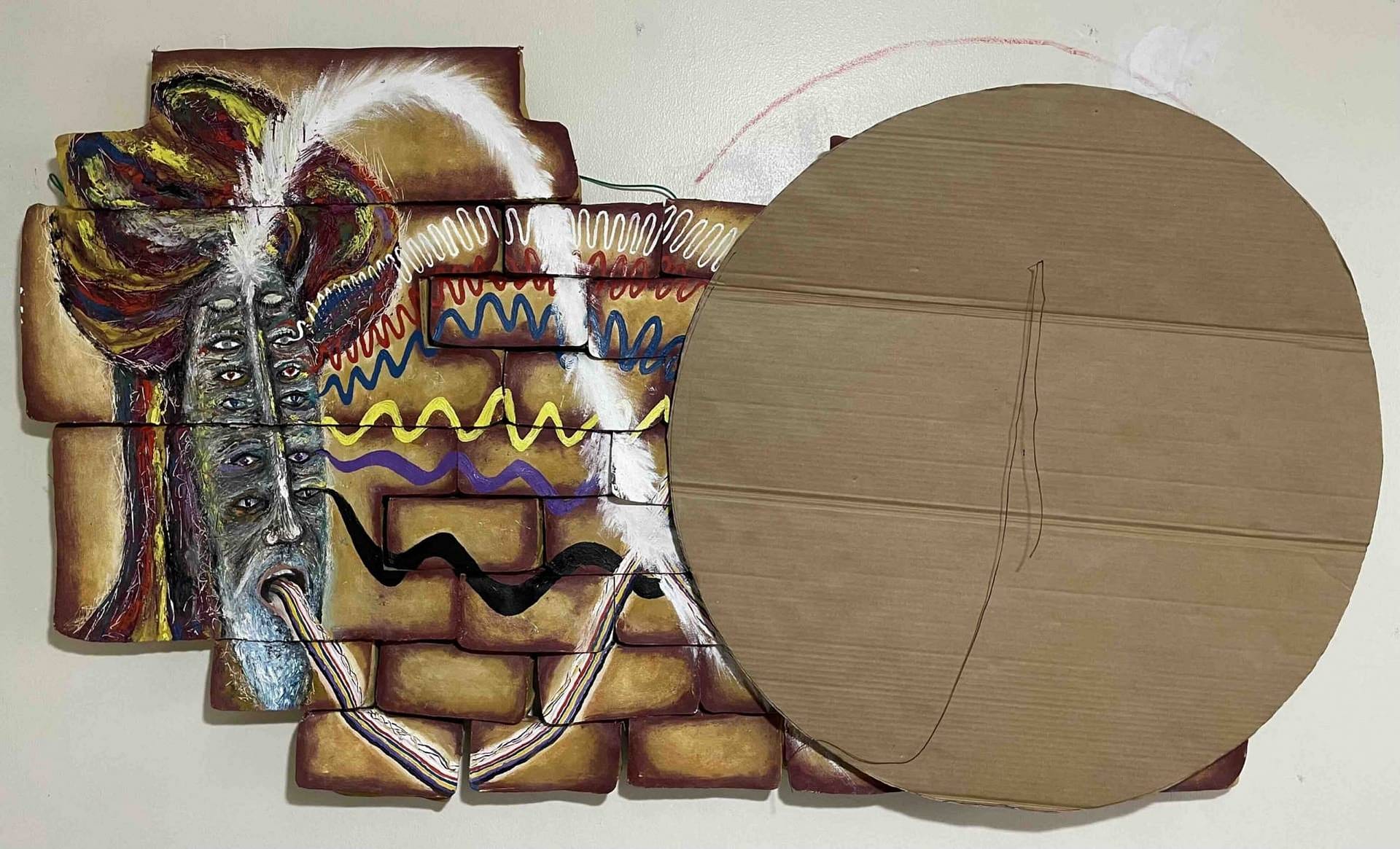
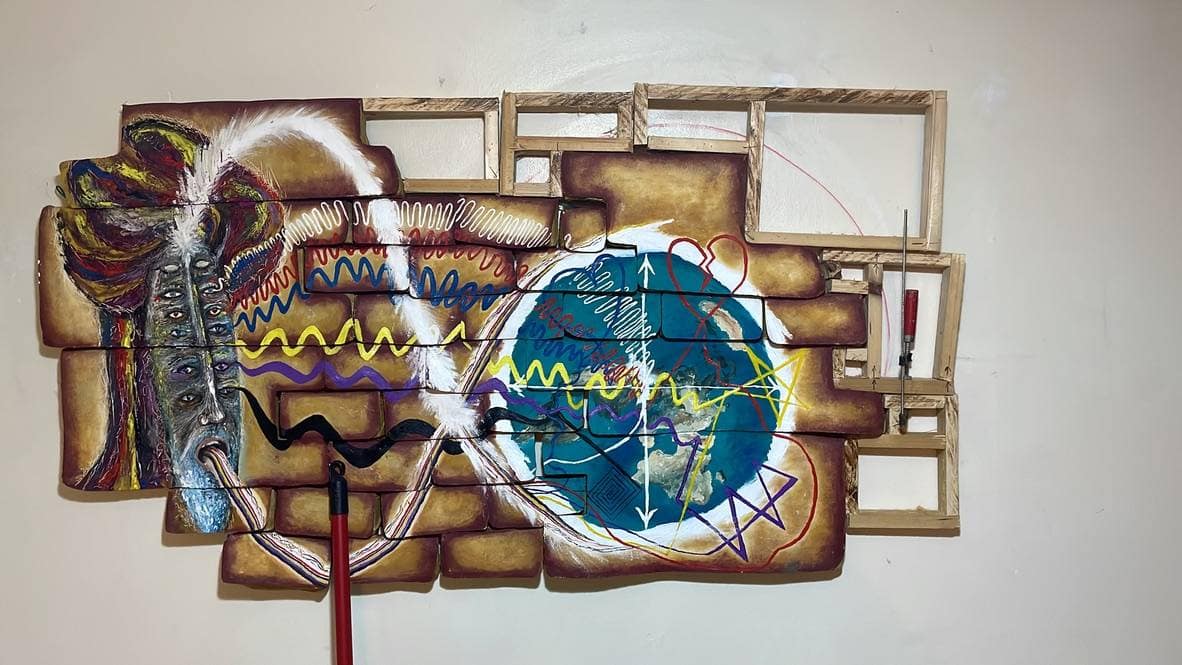
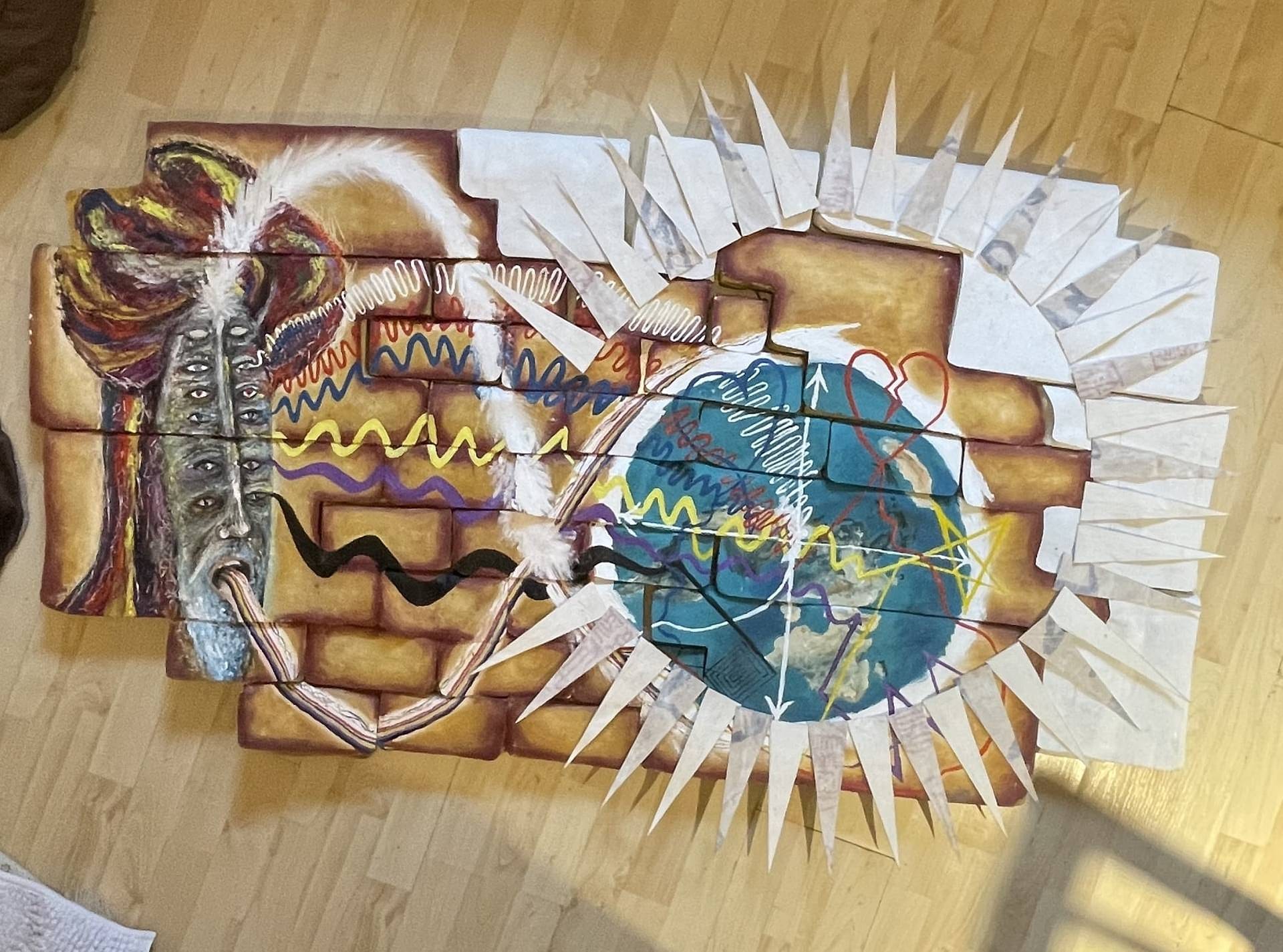
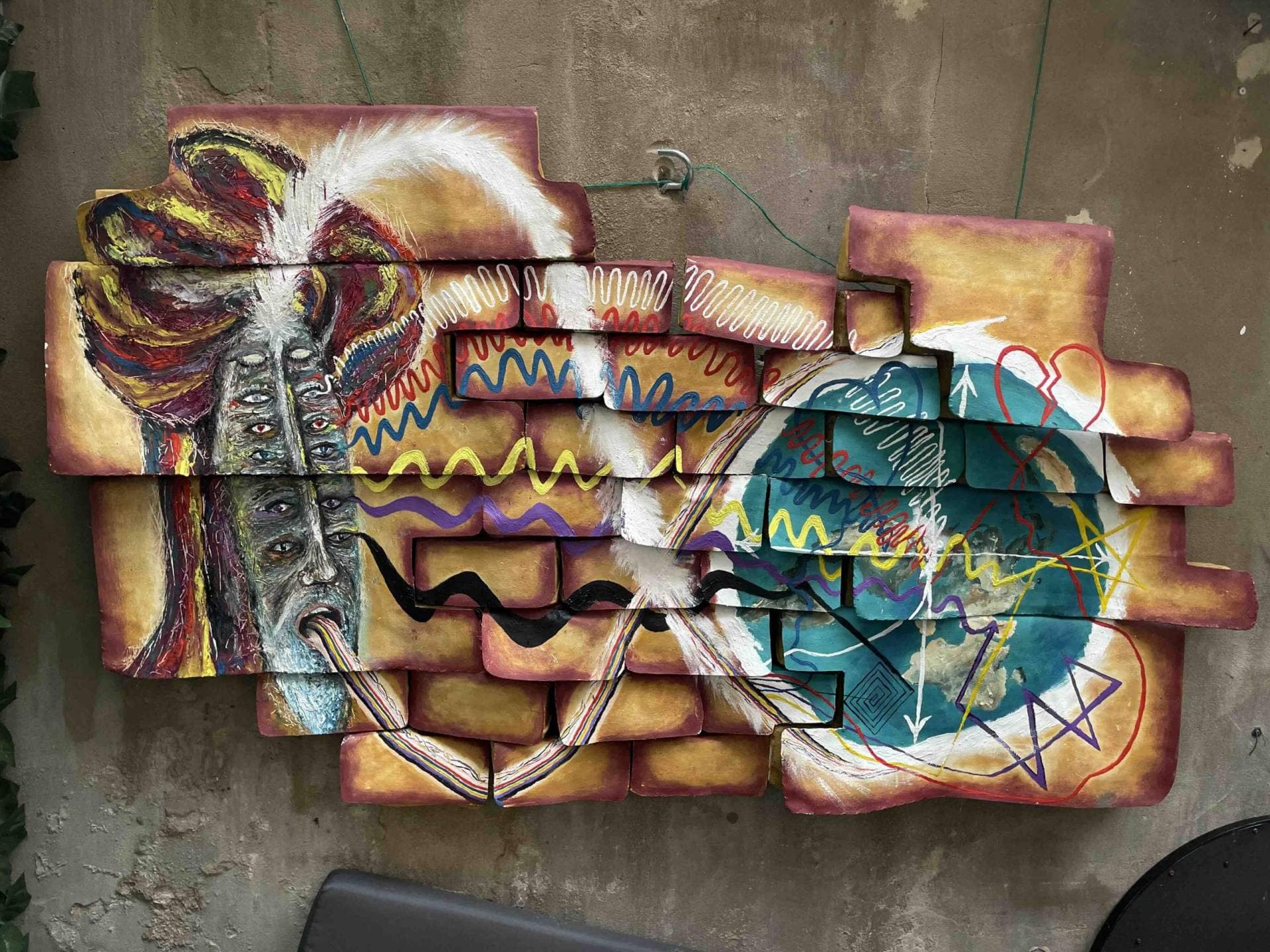
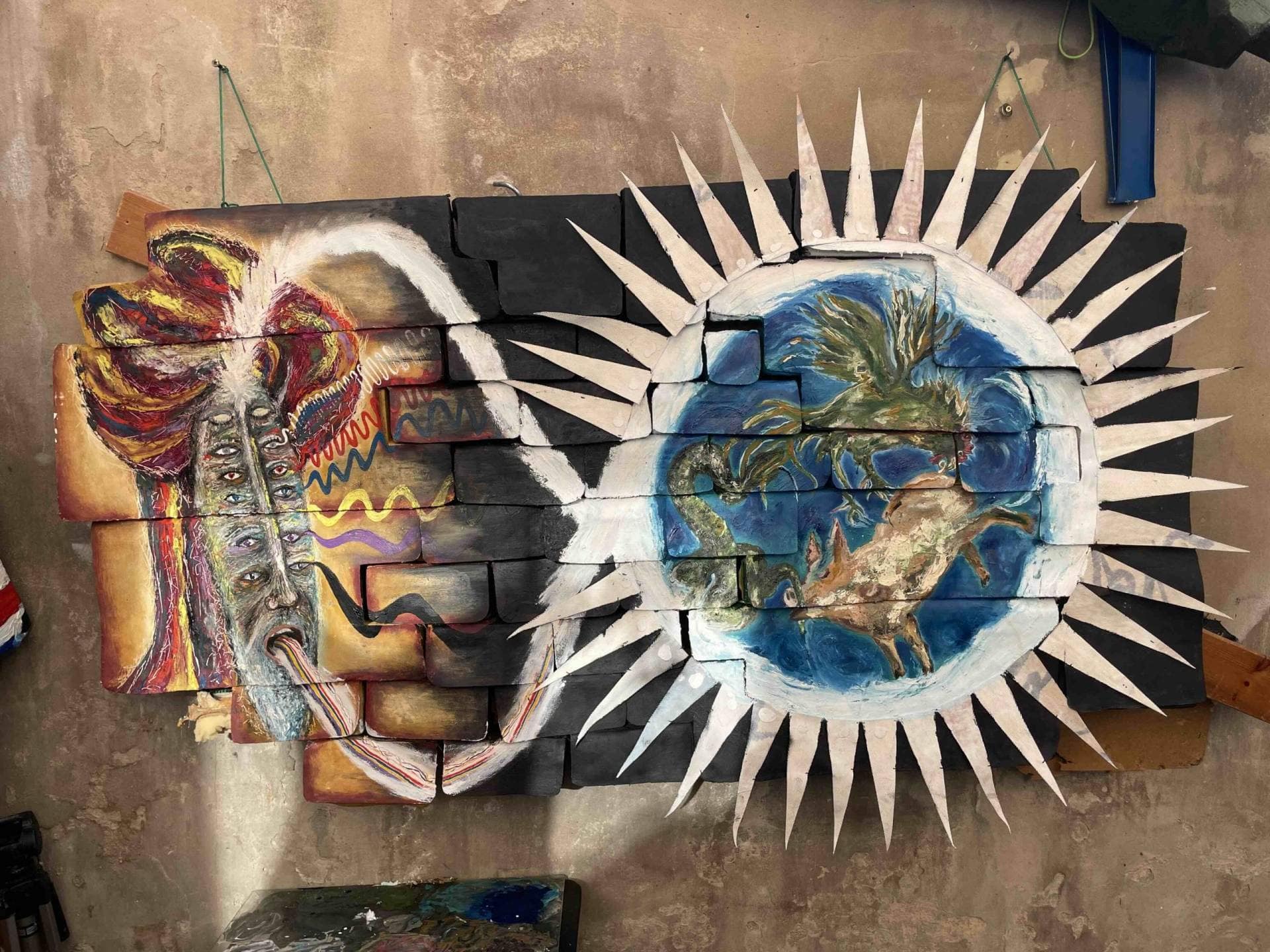
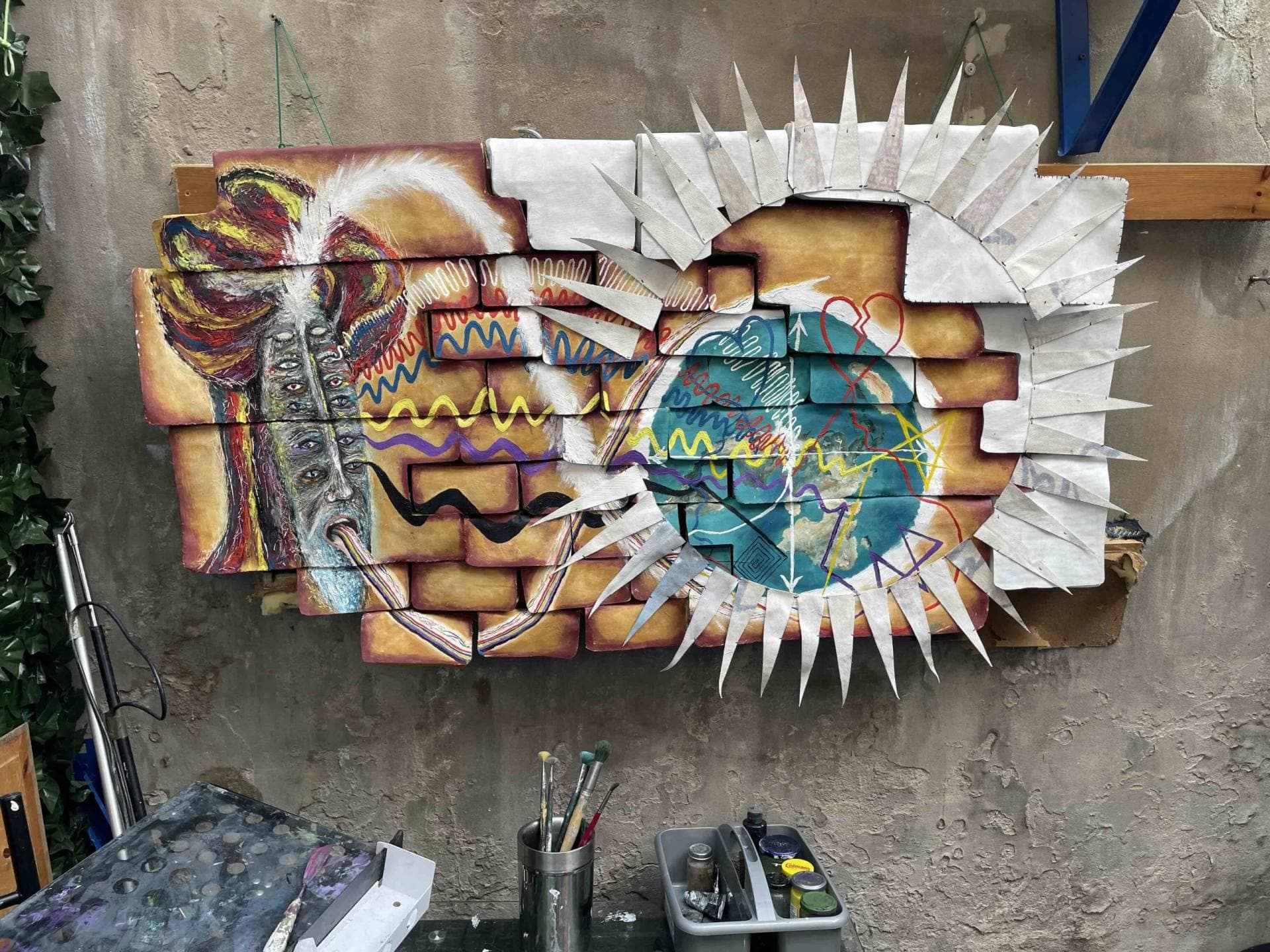
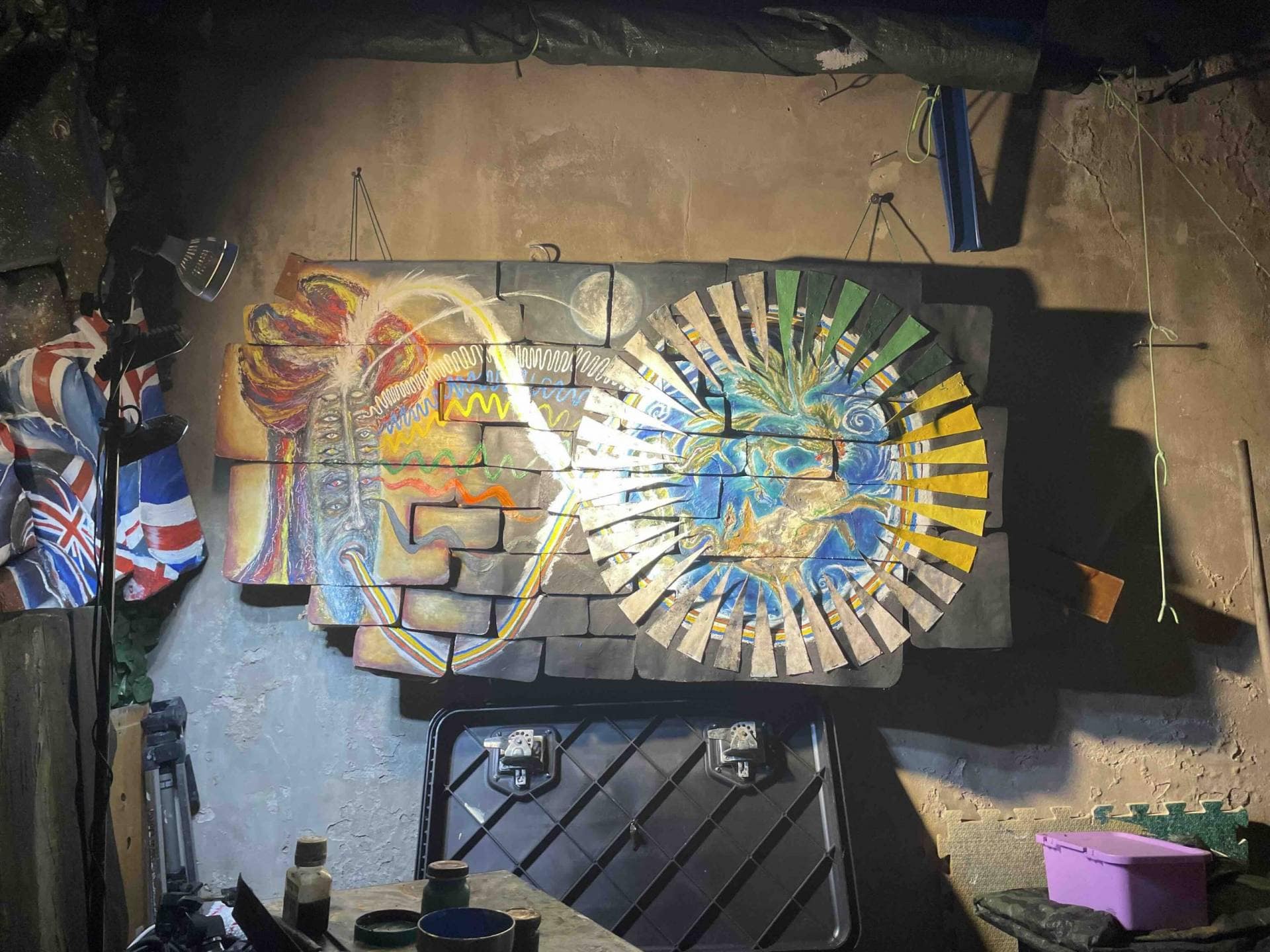
This research led me to the concept of the Homo-Hologram and to a series of paintings in which I tried to break the limits of the conventional picture.
One day I was walking past one of these paintings. I turned to look at it and suddenly heard, clearly, an inner voice that said to me:
IT’S A GAME.
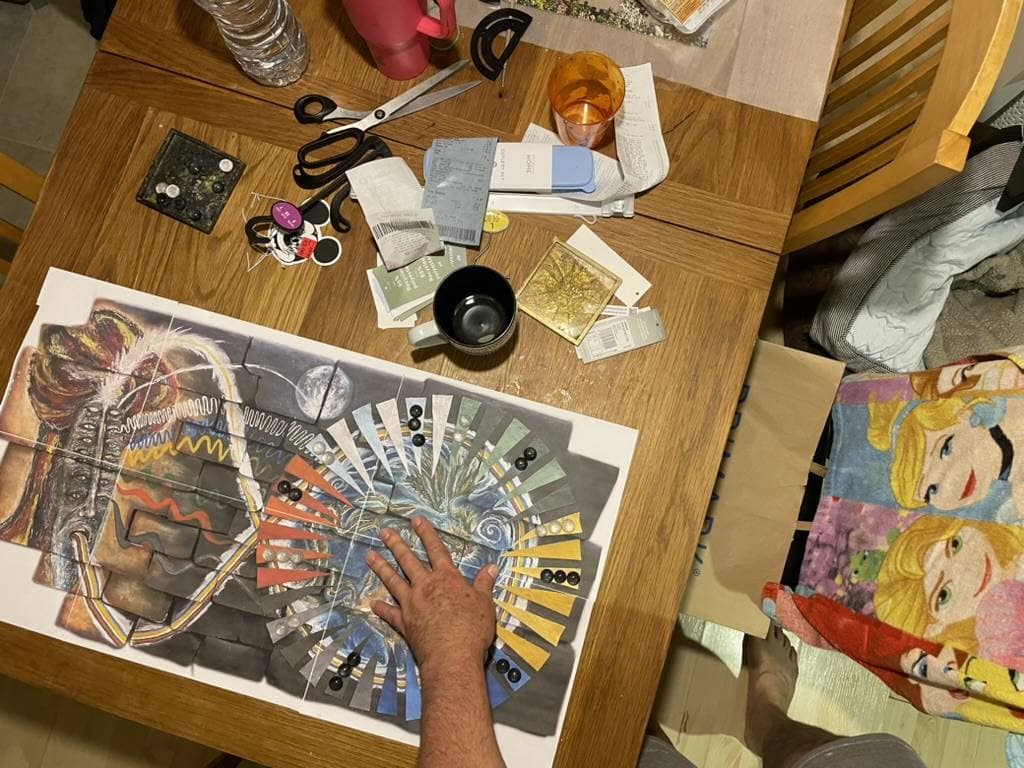
From that moment I stopped seeing the painting only as an image. I began to imagine that one could enter it, move through it and make decisions inside it.
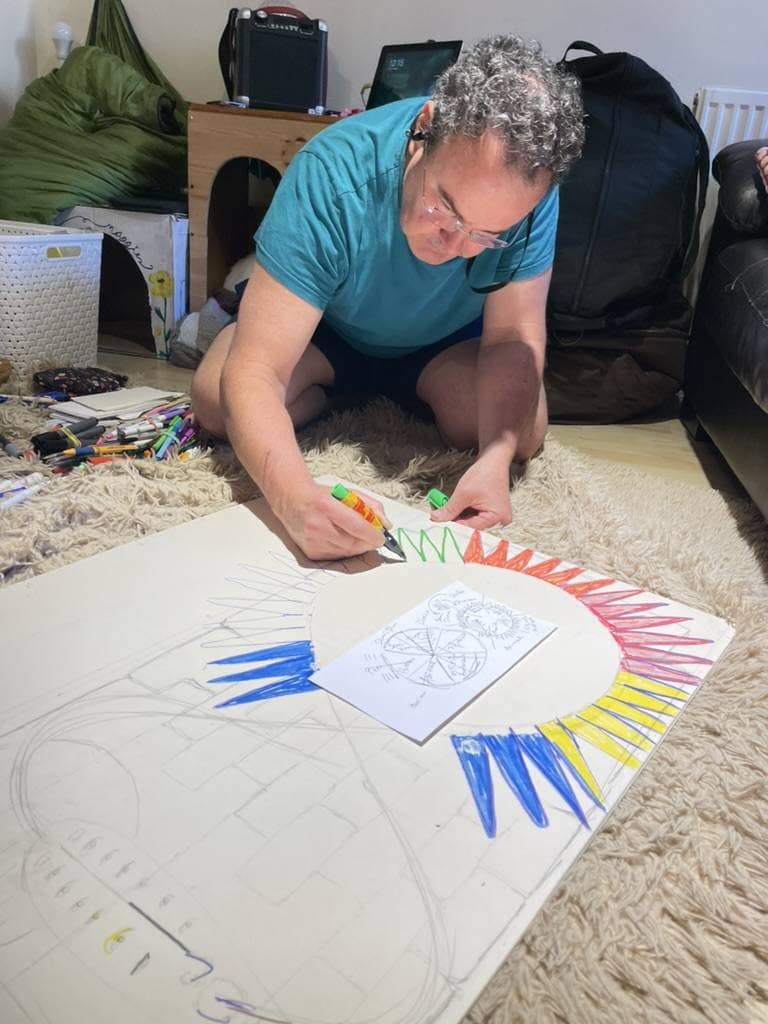
I started developing different prototypes with my son Constantino. One of them was called TrascendingLife. We tried many possibilities, discarded many, and kept transforming the concept, looking for something that, besides containing the ideas of the work, could really be played and be fun.
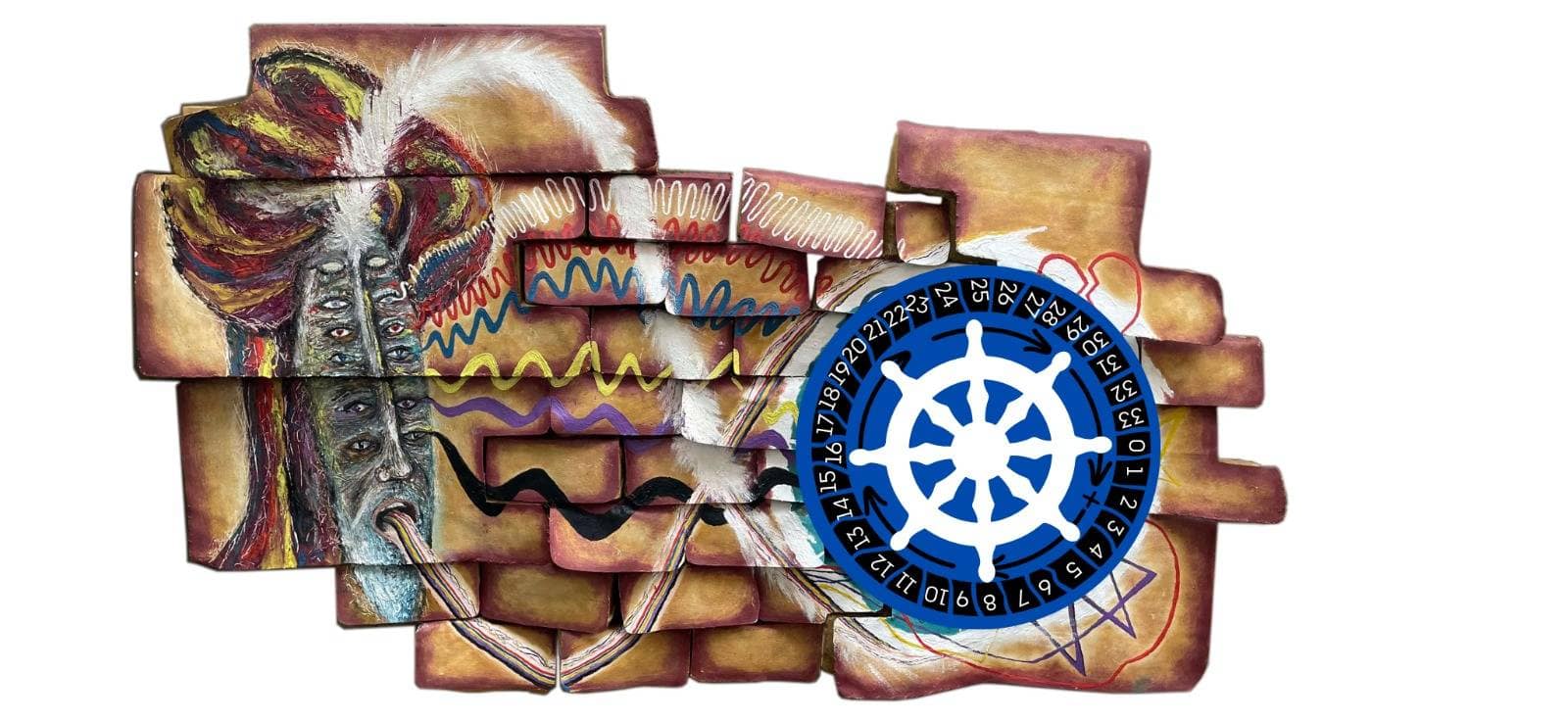
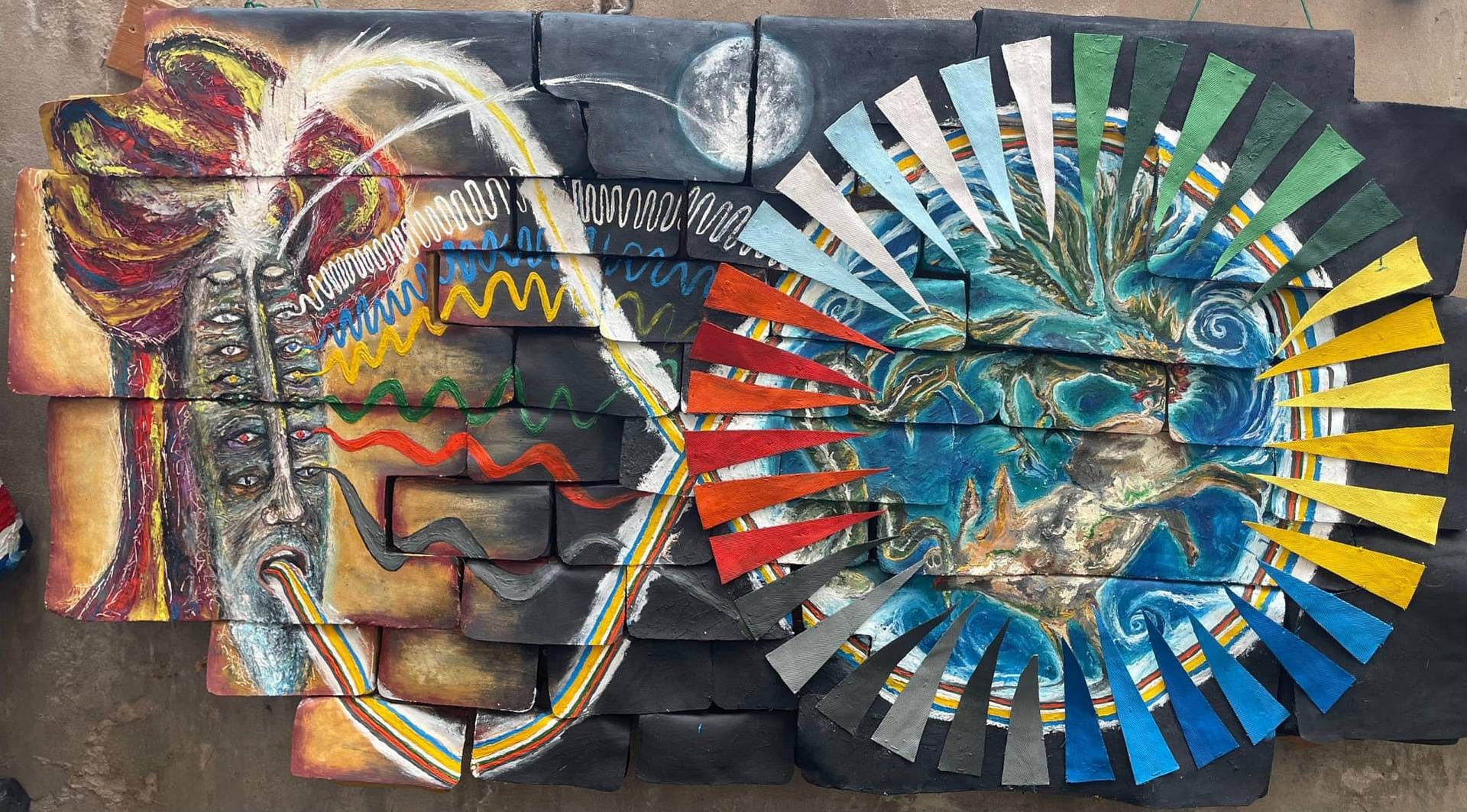
That painting thus began a transformation that would last years. The Homo-Hologram became a board; the board began to incorporate new ideas, characters and symbolic systems; and that experiment would end up becoming what we now call Samsaragammon.
I did not design a game first and then turn it into art.
The game came out of the painting.”
— Federico García

CURVISM: PAINTING BEGINS TO LEAVE THE FRAME
This image was later used as the cover of my book Esto es Curvismo, no Cubismo (This is Curvism, not Cubism).
The book had a very limited circulation, but it is part of the project’s history because it documents a stage in which my research into Curvism, painting and the emerging Samsaragammon began to converge.
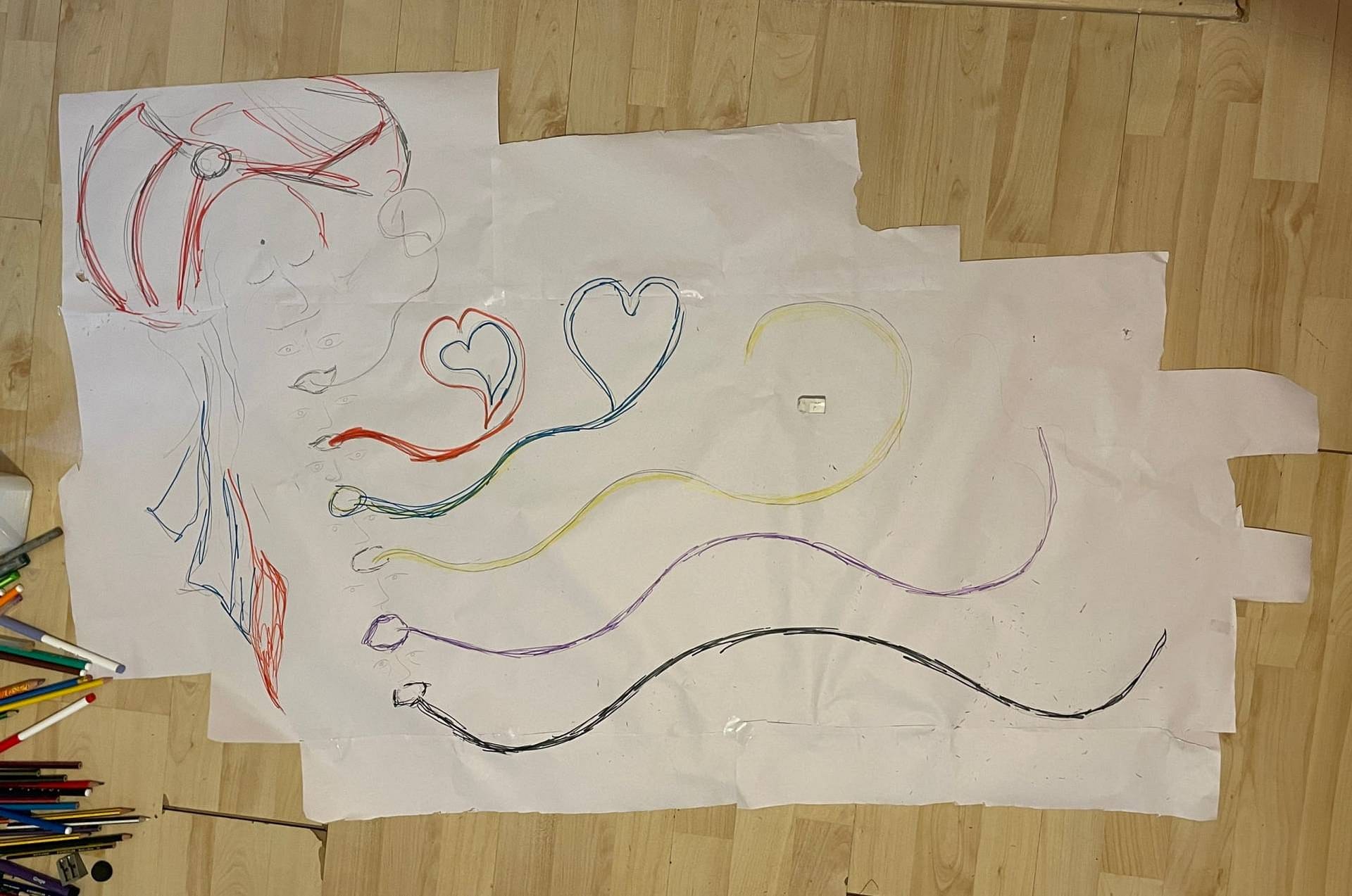
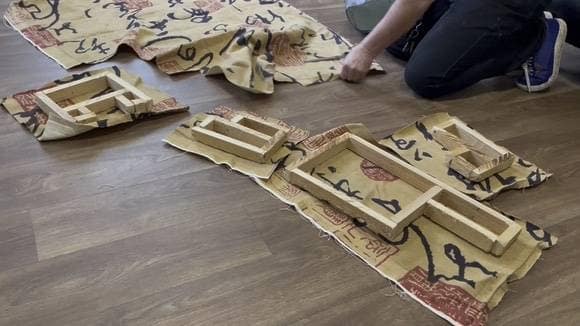
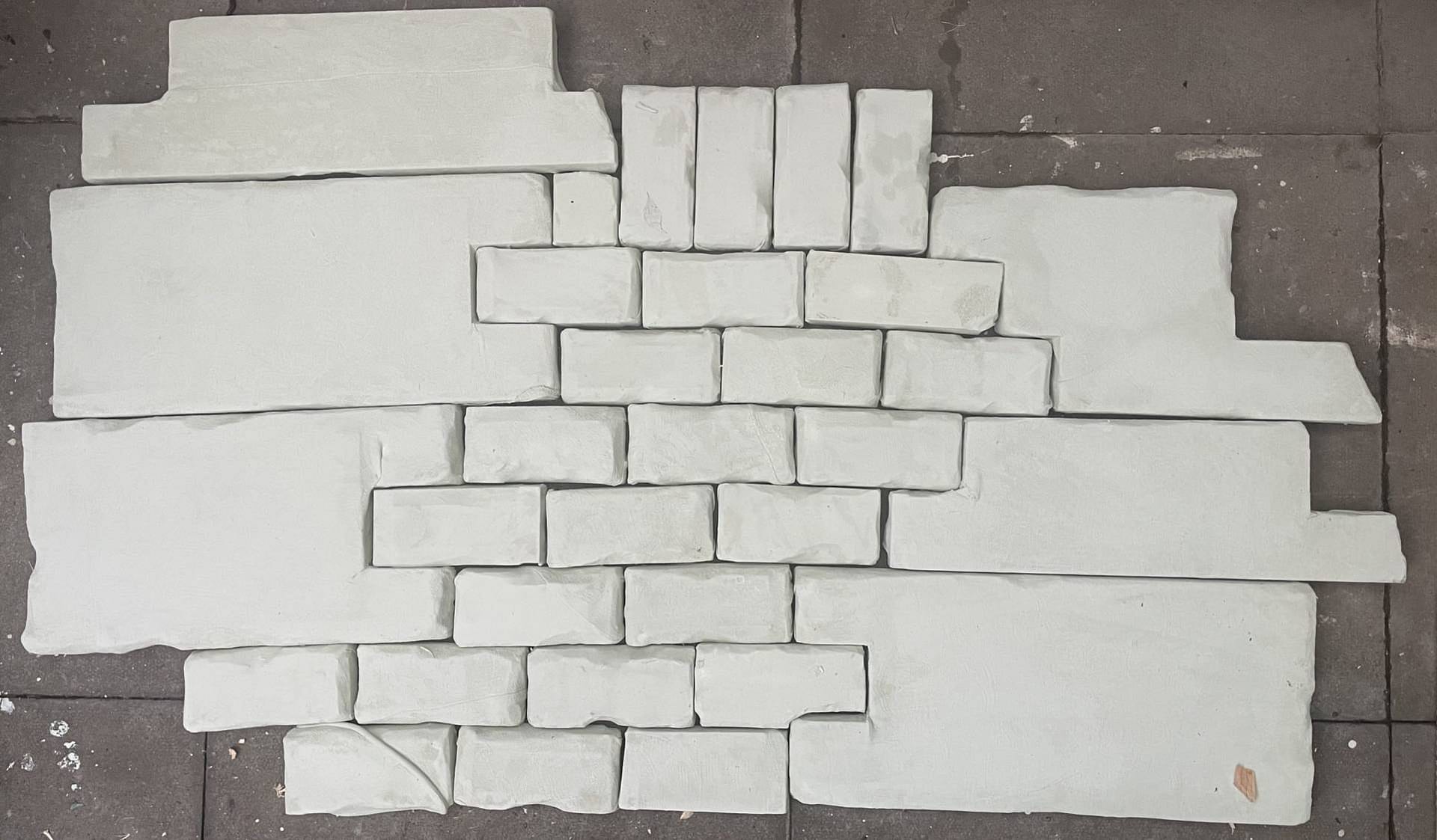
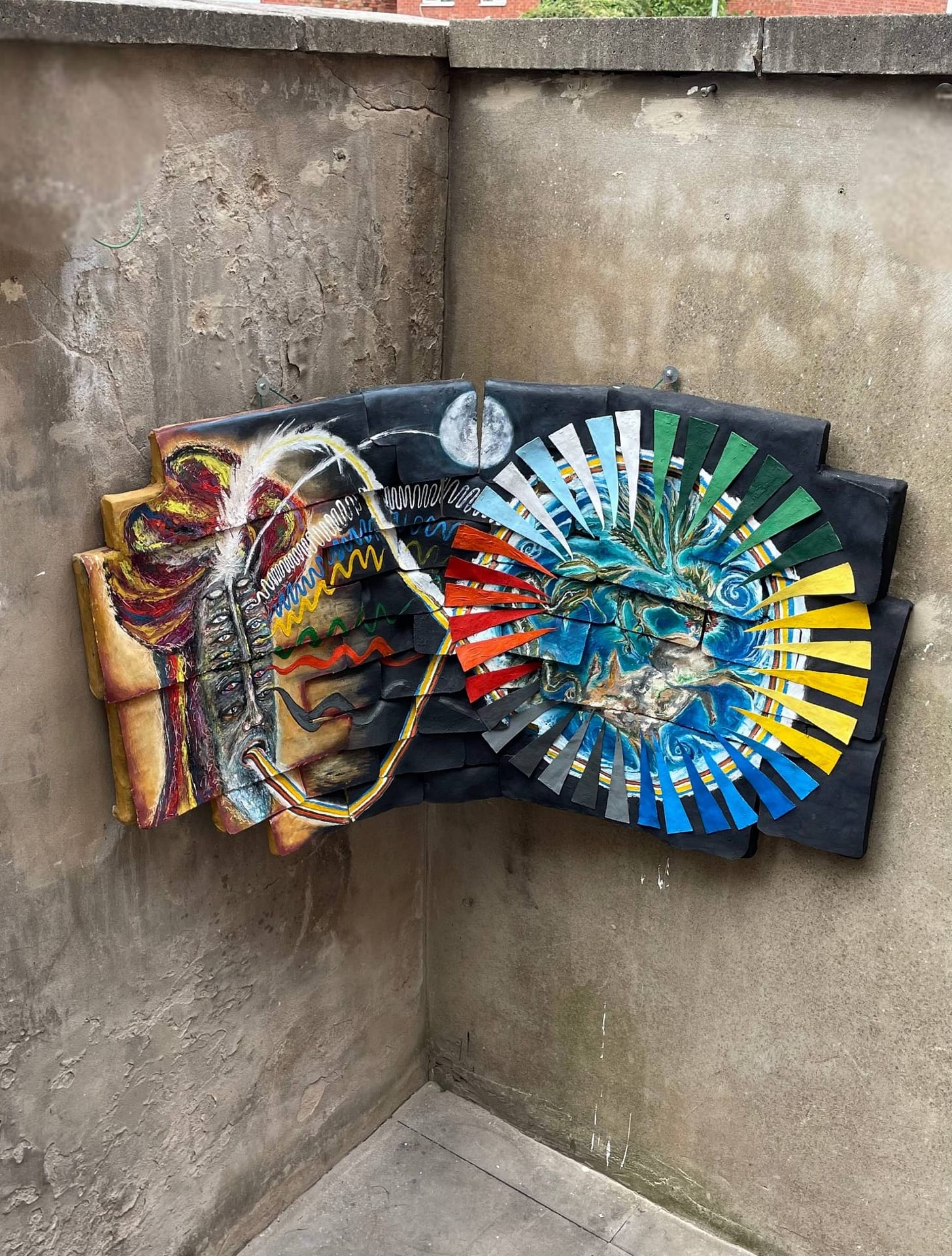
The work no longer sought to behave like a conventional rectangular painting. The canvases fragmented, changed position and began to build a structure that could be reorganized.
Without knowing it yet, an idea was emerging that would later be fundamental to Samsaragammon:
painting could stop being just an image and become a system.





📹 The 1000mm Rule Explained
🔢 2,580,000 : 1000mm
Years to millimeters living in the round. We're playing wrong by just 4 millimeters.
The comparison of the one-meter rule
Curvism was pure and natural evolution until 10,000 years ago. Now it is pure revolution.
Watch how the philosophical foundation connects to the game mechanics
© Federico García — All rights reserved. Samsaragammon is part of the artistic movement Curvism instead Cubism.